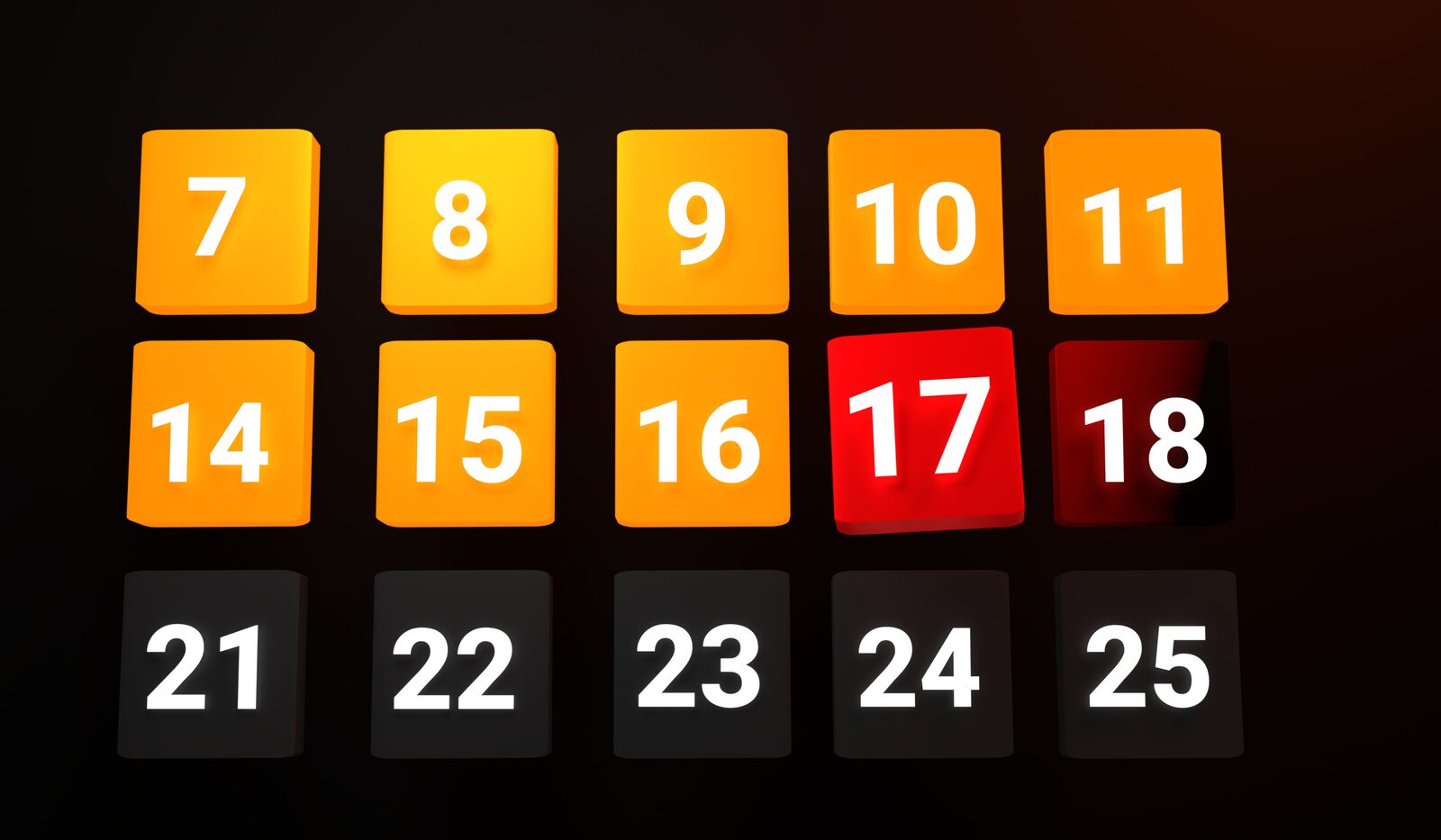
At first, this question might feel a little off. You might ask yourself:
Aren't streaks made for the sole purpose of not being broken?
On the surface level, I'd completely agree.
But let me ask you something first. Have you ever built a streak so long that you started wondering what would happen if you broke it? Not because you wanted to abandon the habit, but because you just wanted to feel like you had the choice to break it?
So are streaks meant to be broken? Not exactly. But they're allowed to be, which makes a world of difference.
Where streaks come from
To see why, it helps to know where streaks come from.
Streaks are now part of modern life, found in countless apps, some built entirely around them. But they're not new. Streaks have been in our lives far longer than the internet.
For decades, you would hang up a calendar on your wall and follow the "Don't Break the Chain" method: tick off each day without failing, each mark meaning you completed the task you set out to do.
The psychological traps
The more you immerse yourself in streaks, the more you start pondering the traps that come with them. Streaks are often designed to keep you hooked on a product, a service or a habit.
So should we demonize them? Shouldn't they be classified as a form of addiction? Why are streaks accepted and used by so many apps?
Because streaks can benefit both sides:
- You return and keep up your habits.
- The platform gets you to return to the app itself.
That's why apps keep implementing the system and people keep liking it. But these two interests aren't always identical.
When the goal becomes the streak
Streaks push us forward even when we lack the willpower to act, and we keep thanking them afterward. It's as if streaks gave us a temporary artificial will, so we don't fall off the track toward our future goals.
But after weeks, maybe months, of a perfect streak, a tension can form.
Our focus shifts from the goal to the streak itself.
This is where streaks can become unhealthy. The goal becomes the streak, not what we intended when we started.
That puts us in a grey area. Once our focus has moved to the streak, should we still value it because it indirectly moves us closer to our original goal?
The problem is not that we want to continue a hundred-day streak. It's that we lose our freedom of choice. We enter a war between our will and the streak. I may want to skip today's gym session because I'm tired, or eat an unhealthy meal and skip my diet, but I'm not allowed to, because that would break my "perfect" streak.
Consistency is not perfection
Humanity is not perfect and never will be. We are not monotonous robots running a list of tasks. We are curious creatures who want to do different things from one day to the next. So we cannot truly achieve perfection, not even in a streak.
What we can have is consistency. Consistency differs from perfection because it doesn't imply always succeeding. It means we can fail and still keep pushing forward toward the end result.
Our wagon doesn't stop at the little pebbles on its way.
Think about it this way:
- A person who practices piano five days a week for a year might develop considerable skill without a single unbroken daily streak.
- Another person may keep a perfect streak for a month, then abandon the instrument entirely.
This is why we need to talk about self-forgiveness.
Forgiveness
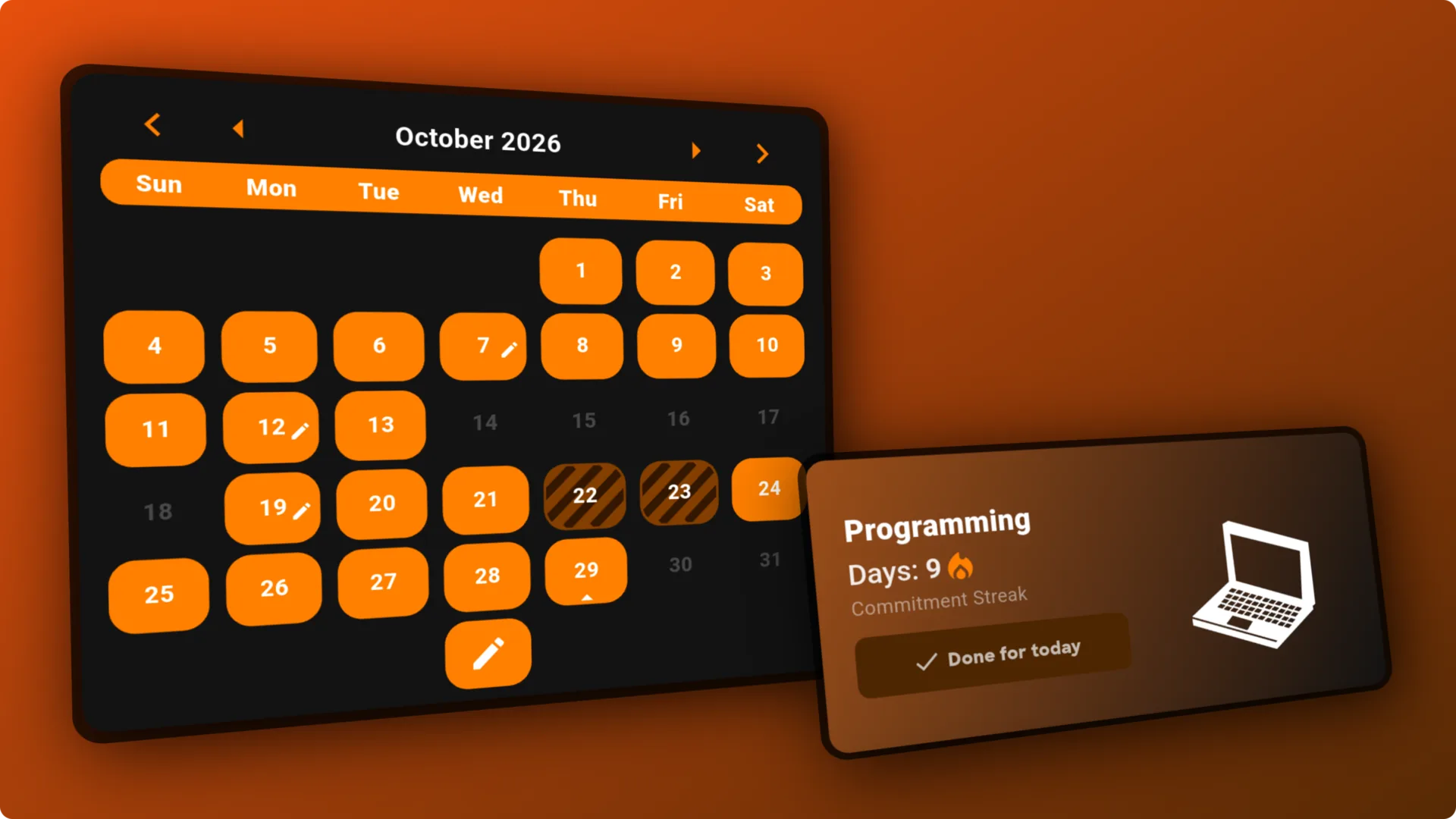
Instead of being mad at myself for the rest of the week because I snoozed through my 5 AM alarm, I can leave it behind and concentrate on what's still ahead, without the distraction of self-punishment.
This is why failing a high-count streak feels like we flatlined. To a simple streak, going from X all the way down to zero means complete erasure of progress. But that isn't true.
Progress only diminishes when we permanently stop showing up.
A long chain of progress can't be reversed by a short period of hiccups. Your experience, your skills and the effort you put in won't go away. One interruption is not the same as abandoning the journey.
Remember why you started
Perhaps the point isn't to break a streak, nor to preserve it at all costs. It's to remember why you started in the first place.
A streak is a tool to encourage you, a visual reminder of your progress, even on the darkest days. It's not something to keep pristine, and it doesn't dictate what you must do each day. It moves alongside you as you make your way forward.
And when that number goes back to zero, it's not a reason to feel lost. It's a reminder to lift your head above water and keep swimming. Your road doesn't end with a broken streak. It continues for as long as you choose to pursue the goal that brought you here.
Bonus: how I approach this in StreakRise
These ideas shaped how I built StreakRise. Here's how:
Growth streaks, not just perfection
You choose which days are active. Missing an inactive day never breaks your streak, and completing one counts as a bonus day. Enough bonus days let you add another active day, so difficulty grows at your own pace. If you'd rather go all in, full commitment streaks are 7/7.
Forgiveness you earn
When you miss a day after building real progress, the app doesn't wipe it and doesn't punish you. You can spend a forgiveness token, then keep a perfect streak through a forgiveness contract, which gets longer the more tokens you use.
Reflection, not just counting
Add a note to any day you complete, and use the journal section to look back at what went wrong and what worked.
Want a streak that works with you, not against you? Try StreakRise